Rider’s Corner Guide to Getting a Thai Motorcycle License
Why is getting a motorcycle license important?
Some visitors to Thailand are cavalier about having a valid motorcycle license because in the past irresponsible rental companies didn’t ask for it. They think they can just pay a small fine if they are stopped by police. There are two reasons to make sure you have a proper license. First, your travel and/or health insurance will deny your claim if you have an accident while driving without a valid license. Second, the Thai legal system is already likely to come down hard on you if you have an accident that involves injury to others. Not having a license is an aggravating factor that will make it difficult for you to claim you were not at fault, no matter what the circumstances. It will add to the fines and damages you have to pay. Actual prison time is unlikely, but a suspended sentence is a strong possibility if you are found to have been riding recklessly. Stay within the law both in terms of having a license and riding responsibly.
Who can get a Thai motorcycle license? Can I get a five-year license?
Thai citizens and foreigners on long-term visas such as a work visa or retirement visa are eligible to apply for a two-year provisional license, and when that expires they can get a five-year license. You need to have at least six months validity remaining on your passport.
Some tourists have successfully applied for a two-year license even when they entered the country on visa exempt stamps. For tourists, whether your application is successful can depend on which Department of Land Transport (DLT) office you go to, and even which official happens to be on duty that day. Given this uncertainty, as well as the expense and time needed to get a license, most short-term tourists are better off using their home country license combined with an International Driving Permit. This is officially limited to stays in Thailand of 90 days or less. At that point you could leave and return to Thailand to start the 90 day clock again. If you are frequently staying beyond 90 days, it’s probably time to think about a long-term visa anyway.
WARNING: Do not fall for the scam websites that claim to provide an IDP online. These are fakes, and while they might fool the odd policeman, they are not going to stand up to scrutiny after an accident. You need to obtain an IDP from the proper agency in the country of your license before you travel.
Currently it is very hard to predict whether you will be able to get a five-year license. We know of people who were eligible for the five-year license and were given another two-year license instead, and others who were not eligible and got it. If you can, make sure you have more than one year of validity left on your visa, this supposedly increases your chances of getting the five-year license.
If you are lucky enough to have a five-year license, note that it expires on your birthday. When it comes time to renew it, wait until a day after it expires. (You have a grace period of one year in which to renew without retaking any tests.) This will effectively give you a six-year license, as the next expiry will be six birthdays after the renewal.
Note that the five-year license entitles you to apply for an International Driving Permit at the DLT. The two-year license does not have this benefit because it is technically a provisional license. You can get the 1949 Geneva Convention IDP or the 1968 Vienna Convention IDP. If you are going to ride in Vietnam, get the 1968 IDP. Getting the IDP at the DLT involves, you guessed it, yet another residence certificate and more passport photocopies, plus two passport photos.
WARNING: Do not use services that promise to get you a Thai motorcycle license quickly and easily. These are illegal and unreliable.
What documents do I need to prepare?
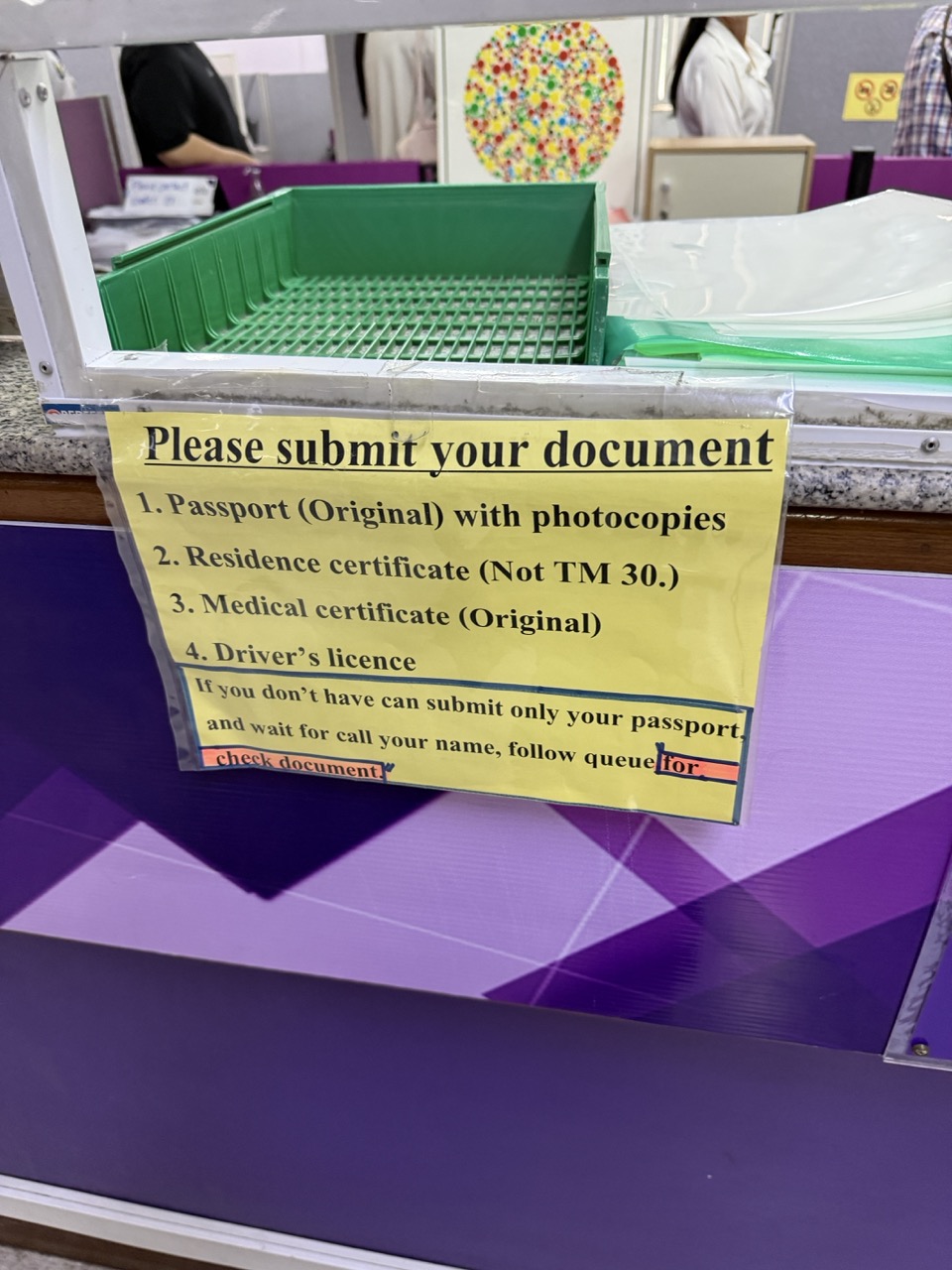
* Residence Certificate
Start with the most troublesome document first, the residence certificate. This is essentially a document that says you are living in the country legally. It is valid for 30 days. Make sure you specify that you are applying for a drivers license, this must be written in Thai on the certificate. If you are applying for both car and motorcycle licenses, make sure you get two residence certificates.
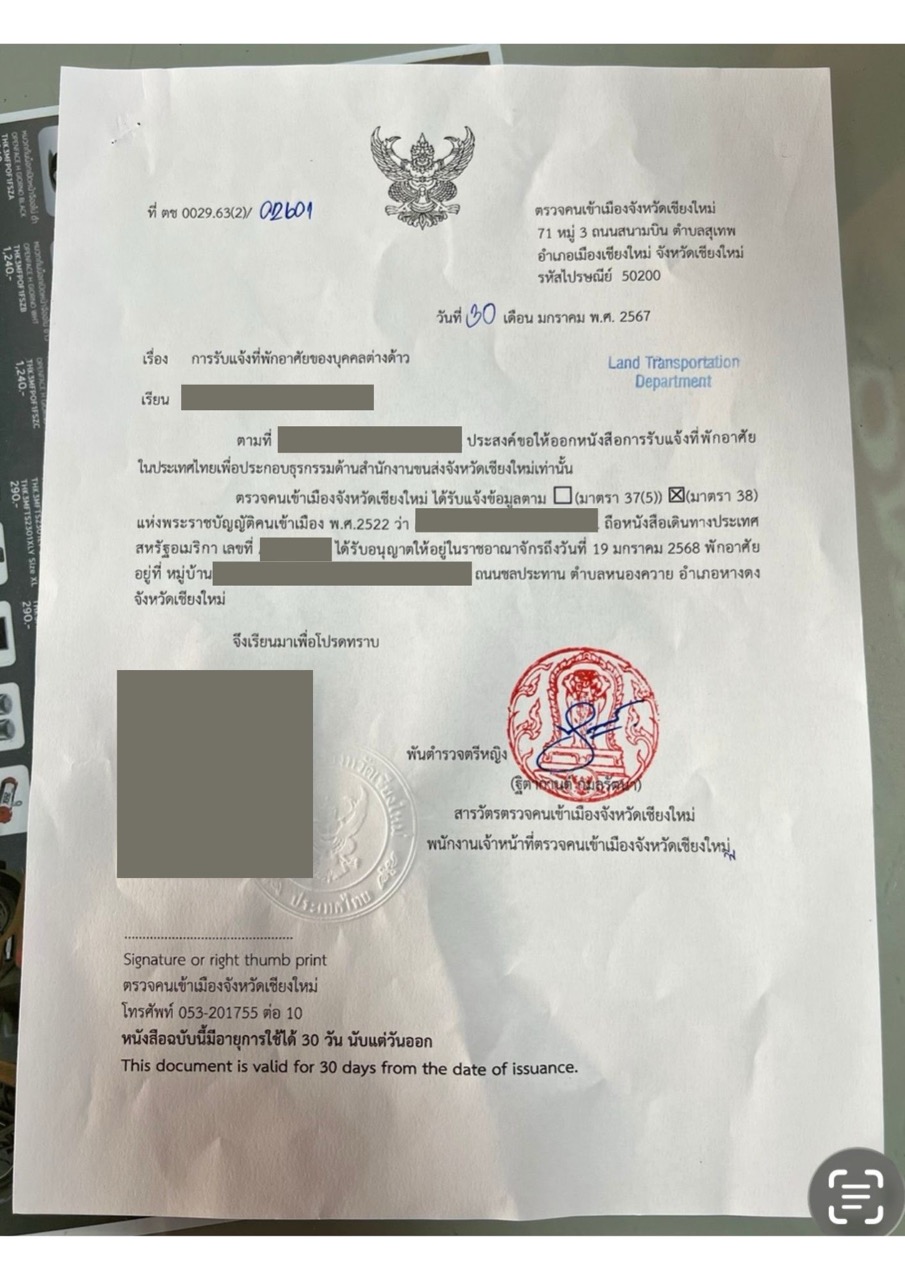
If your country’s embassy or consulate provides this service, this is often the easiest way to get residence certificate(s). But many countries (for example, the US, UK, Canada and Australia) no longer do this. And this option may be more expensive.
If you have a work visa and it lists your residence address, this can fulfill the requirement.
Most people will need to obtain residence certificate(s) from the immigration department. In Chiang Mai, go to the main immigration office near the airport early in the morning. Make sure you are up to date on your TM30 and 90 Day Reporting before starting this process, and bring those original documents and signed photocopies, along with your passport, signed photocopies of the relevant pages of your passport (data page, visa page, and most recent entry stamp), a signed photocopy of your lease if possible, and two passport photos. If you are applying for two certificates of residence to get both a car and motorcycle license, double all of these.
In theory, the immigration department provides residence certificates for free. The catch is that you will wait about four weeks for the certificate, and still pay 50 baht for them to mail it to you. You can pay 500 baht per certificate for an express service. Drop off the application in the morning, and pick up the certificate(s) the following day.
Our preferred option is to have a visa agent such as The Colonel (conveniently located across the road from the main immigration office) obtain the residence certificate(s) for us. This usually costs 1000 baht and takes one day, and the document requirements are the same. But the experience is more pleasant and less likely to go wrong, so we consider the extra 500 baht per certificate well spent.
* Medical certificate
This is available from most hospitals and clinics, and the price is usually between 150 and 300 baht. It is valid for 30 days. The check is cursory, usually blood pressure, a vision test and some questions. Hugsa Clinic near Thapae Gate is one good option. If you’re already on your way to the DLT office in Mae Hia, the Chiang Mai Klaimor Hospital nearby is another option. Bring your passport. If you are applying for both car and motorcycle licenses, get two medical certificates.
* Proof of watching the educational video
Everyone is required to watch an educational video, whether it is your first license or your 10th renewal. Since Covid, these are usually done online, with periodic quiz questions to make sure you are really watching the video. The system will give you a QR code to print out and take to your DLT appointment to prove you watched the video. Go to this website and click the “For Foreigner” button, the process is reasonably intuitive: https://www.dlt-elearning.com/
* Photocopies
Make photocopies of the relevant pages of your passport: the data page, the page with your visa, and the page with your latest entry stamp. We recommend you make multiple copies of each and sign them with a blue pen. If you are applying for a car and motorcycle license you need at least one set for each, so get two sets for each just to be safe.
Also make signed copies of your foreign drivers license front and back if you are converting it to a Thai license for the first time. Again, two sets if you are applying for car and motorcycle licenses. This license needs to have at least six months of validity remaining.
There is a photocopy station on the second floor of the DLT Mae Hia office, so if you mess up you can make new copies there.
Going to the DLT
DLT office hours are usually Monday to Friday, 8:30 am to 4:30 pm.
You can try to make an appointment through the DLT Smart Queue app, but in our experience this is nigh on impossible for foreigners. Some have had better luck with the DLT website: https://gecc.dlt.go.th/dltsmartqueue/foreignerlogin. We have found it better to go to the office early in the day and talk to the staff in person, they may be able to get you an appointment that day or in the next few days.
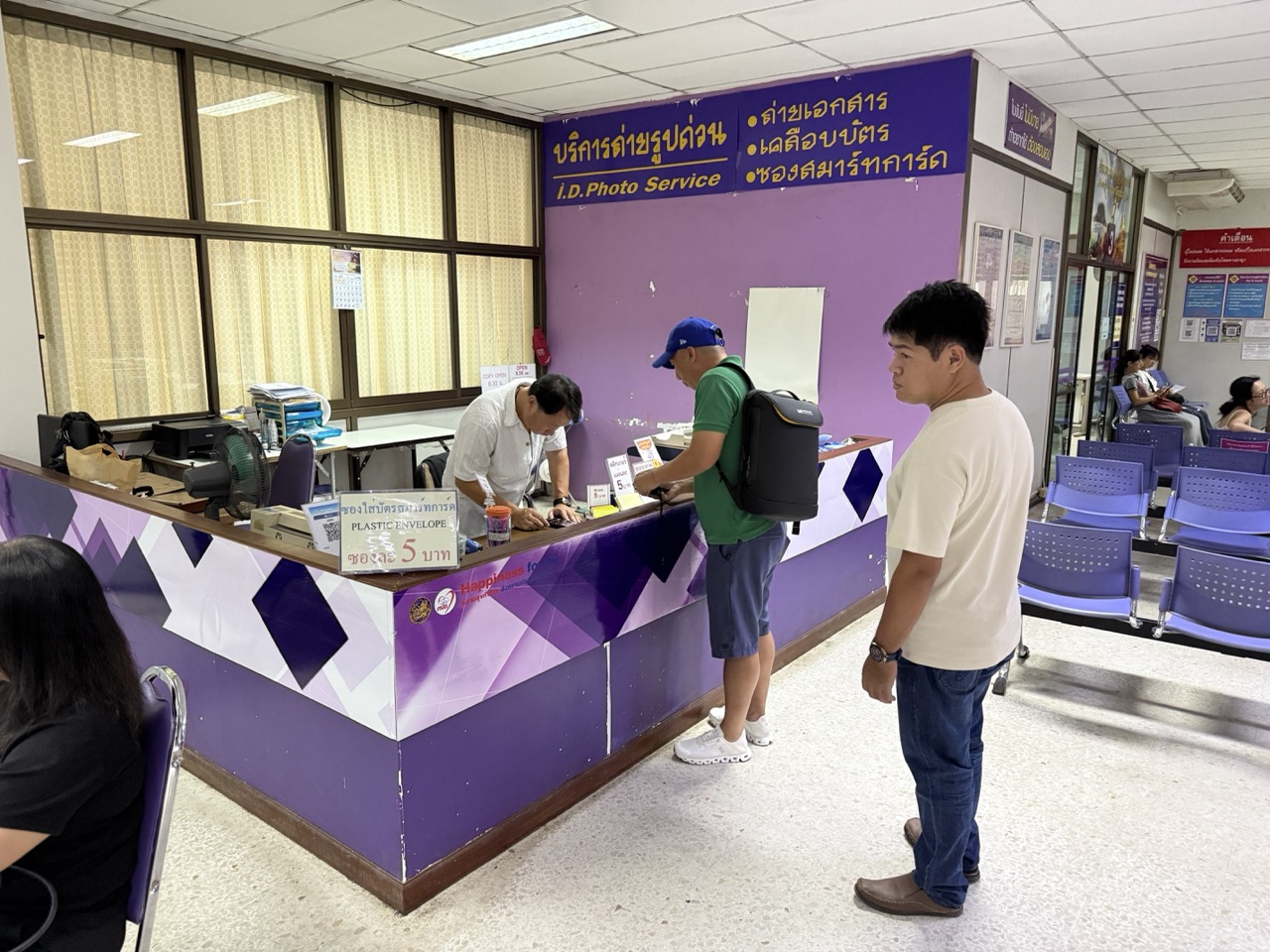
It is always a good idea to dress respectfully (long trousers, collared long sleeve shirt, proper shoes rather than flip-flops) in Thai government offices. Smile and be polite, and you will get better treatment. To avoid very long waits, don’t go on the first business day after a long holiday weekend, or in the first few days after New Year or Songkran. Bring a book, even on an average day you may be waiting for a couple of hours in total between the various steps.
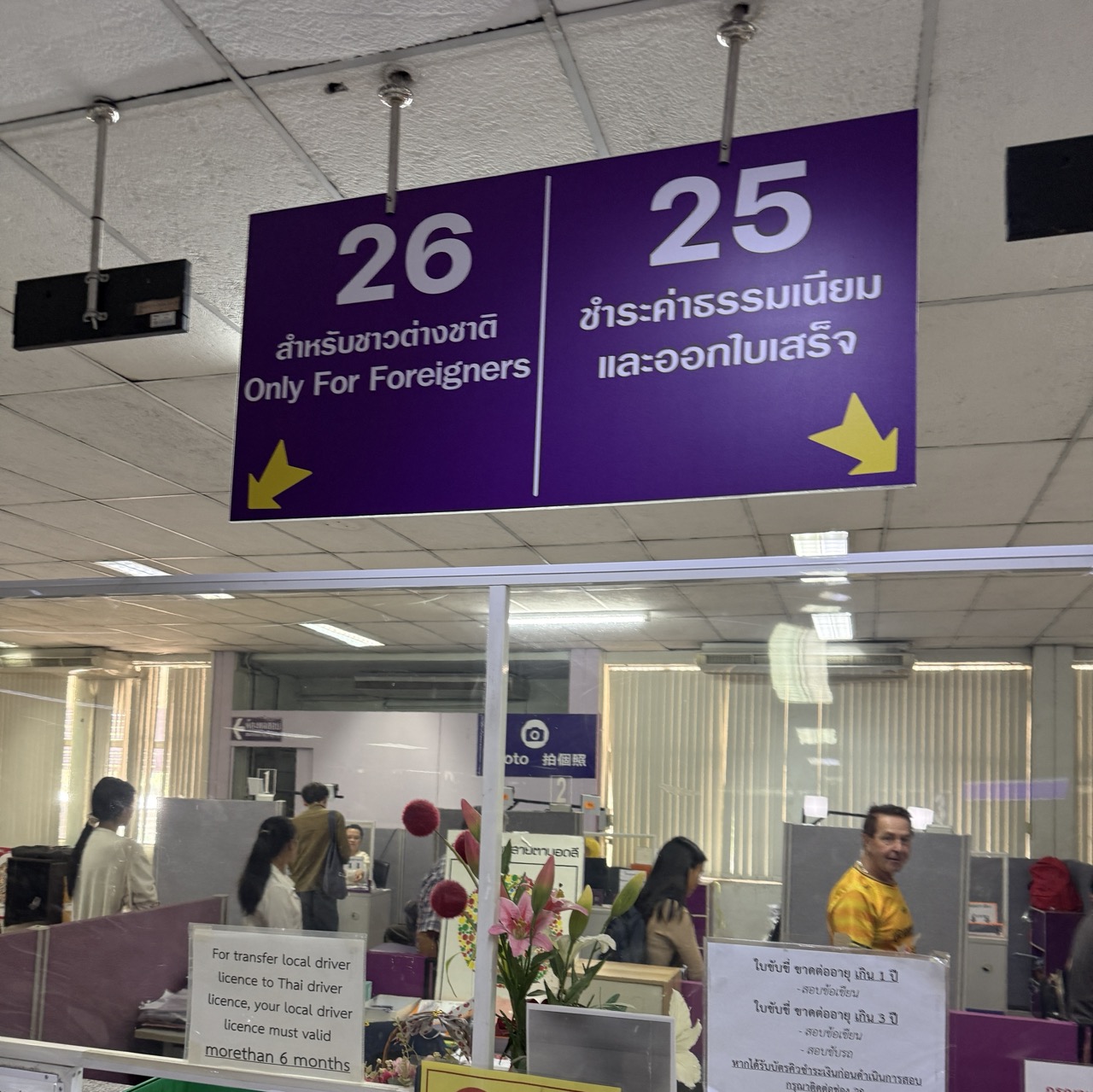
On the second floor at the DLT Mae Hia branch (on the 108 highway, near Big C), window #26 is dedicated to foreigners applying for licenses. The staff is surprisingly friendly for a government office. They will go over the requirements, and if they have time, they will check your documents before your appointment and point out any problems. They will also help you fill out the application form correctly.
If you are starting from scratch as a new motorcycle rider, we suggest you enroll in a driving school. As well as giving you instruction, they will help you prepare for the riding test and smooth the process. They may help tourists get a TM30 for example.
If you are converting a foreign license into your first Thai motorcycle license, you probably won’t have to take a riding test. But you will have to do the written test as well as some tests for color blindness, reaction time and depth perception. There are practice tests online, definitely use them. The English translations of the written test questions are terrible, so you simply need to memorize the correct answers.
The total expense breakdown from renewing car and motorcycle licenses in May 2026:
| Item | Cost (baht) |
|---|---|
| Two residence certificates | 2000 |
| Two medical certificates | 400 |
| Photocopies | 50 |
| The licenses at DLT | 760 |
| Total | 3210 |
Ready to ride in Northern Thailand?
Got your license sorted — or got your IDP? Browse our scooters, big bikes and dirt bikes and book online.